
Bitcoin’s Role in the Energy Transition: The Rise of Sustainable Mining
For years, one of the most persistent criticisms leveled against Bitcoin has been its enormous energy consumption. The Proof-of-Work (PoW) consensus mechanism, which secures the network, requires a vast, global network of specialized computers (or “miners”) to solve complex mathematical problems, a process that consumes a significant amount of electricity. This has led to a narrative that Bitcoin is an environmental disaster.
However, in 2025, a more nuanced and compelling counter-narrative has emerged, one that positions Bitcoin mining not as a problem for the energy grid, but as a potential catalyst for the global transition to renewable energy.
The Problem of Intermittent Renewable Energy
The biggest challenge for renewable energy sources like solar and wind is their intermittency. The sun doesn’t always shine, and the wind doesn’t always blow. This creates a problem for grid operators, who need to maintain a constant, stable supply of electricity to meet demand.
During periods of peak production (e.g., a sunny, windy day), renewable energy projects can generate more electricity than the grid can handle, forcing them to “curtail” or shut down their operations, wasting massive amounts of clean energy. Conversely, during periods of low production, the grid must rely on expensive and often dirty “peaker” plants to meet demand. This problem of intermittency is a major obstacle to the widespread adoption of renewables.
Bitcoin Mining as an “Energy Sponge” and a Buyer of Last Resort
This is where Bitcoin mining enters the picture. A Bitcoin mining operation is a uniquely flexible and location-agnostic energy consumer. A mining farm can be set up anywhere in the world with an internet connection, and it can be turned on or off at a moment’s notice with no significant loss of efficiency.
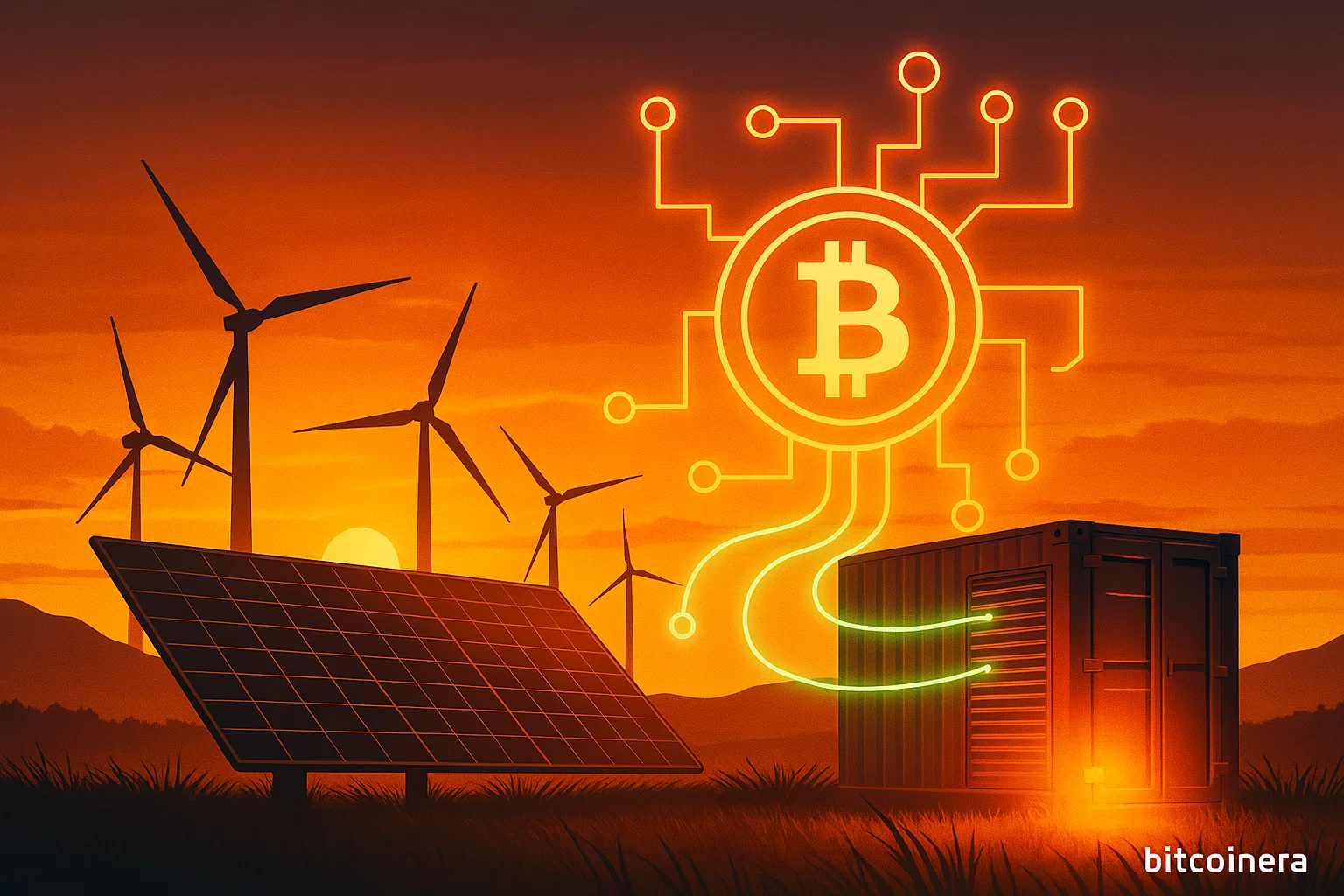
This makes it the perfect “energy sponge.” Bitcoin miners can co-locate their operations with large-scale renewable energy projects and agree to buy up any excess energy that the grid cannot absorb. During periods of peak production, instead of curtailing their output, the renewable energy project can sell their excess, otherwise-wasted energy to the Bitcoin miners.
This provides a crucial, additional revenue stream for the renewable project, dramatically improving its economic viability. In essence, Bitcoin mining acts as a “buyer of last resort” for clean energy, making it more profitable to build new solar and wind farms.
Stranded Energy and Methane Mitigation
Bitcoin mining is also being used to harness “stranded” energy sources that would otherwise go to waste. This includes “flare gas” from oil and gas operations. When drilling for oil, natural gas is often produced as a byproduct. If there is no pipeline infrastructure to transport this gas, it is typically burned off, or “flared,” into the atmosphere, a practice that is both wasteful and highly polluting (as it releases unburned methane, a potent greenhouse gas).
Today, innovative companies are deploying mobile Bitcoin mining data centers directly to oil fields. They capture the flare gas, use it to power a generator, and use that electricity to mine Bitcoin. This process, known as “flare gas mitigation,” turns a polluting waste product into an economic asset and is significantly better for the environment than flaring.
The Evolving Narrative and its Investment Implications
This new narrative of “sustainable mining” is changing the conversation around Bitcoin and making it a more attractive asset for environmentally conscious investors and institutions. As the percentage of the Bitcoin network that is powered by renewable or stranded energy sources continues to grow, the “Bitcoin is bad for the environment” argument becomes weaker. This shift in perception is a key part of the long-term Fundamental Analysis of Bitcoin as an asset.
For traders and investors, this trend has several implications. The increasing integration of Bitcoin mining with the energy grid creates a deeper connection between the price of Bitcoin and the broader energy markets. Furthermore, companies that are focused on sustainable Bitcoin mining are becoming an interesting new class of investment vehicles.
For those looking to invest in Bitcoin itself, understanding this evolving environmental narrative is crucial for navigating the long-term political and regulatory landscape. A secure and reliable platform for holding a long-term Bitcoin position, such as one offered by YWO Trading Platform, the online online broker, is an essential tool for investors who believe in this sustainable future.

Lily Brown is a self-made millionaire and expert in crypto trading with robots. She made her fortune by being one of the first people to invest in Bitcoin, and has since become a leading authority on crypto investing. Lily’s unique approach to trading has earned her a reputation as one of the most successful traders in the world, and she regularly shares her insights with others through her blog and online courses.