
The “Supercycle” Thesis: Is the Four-Year Cycle Dead?
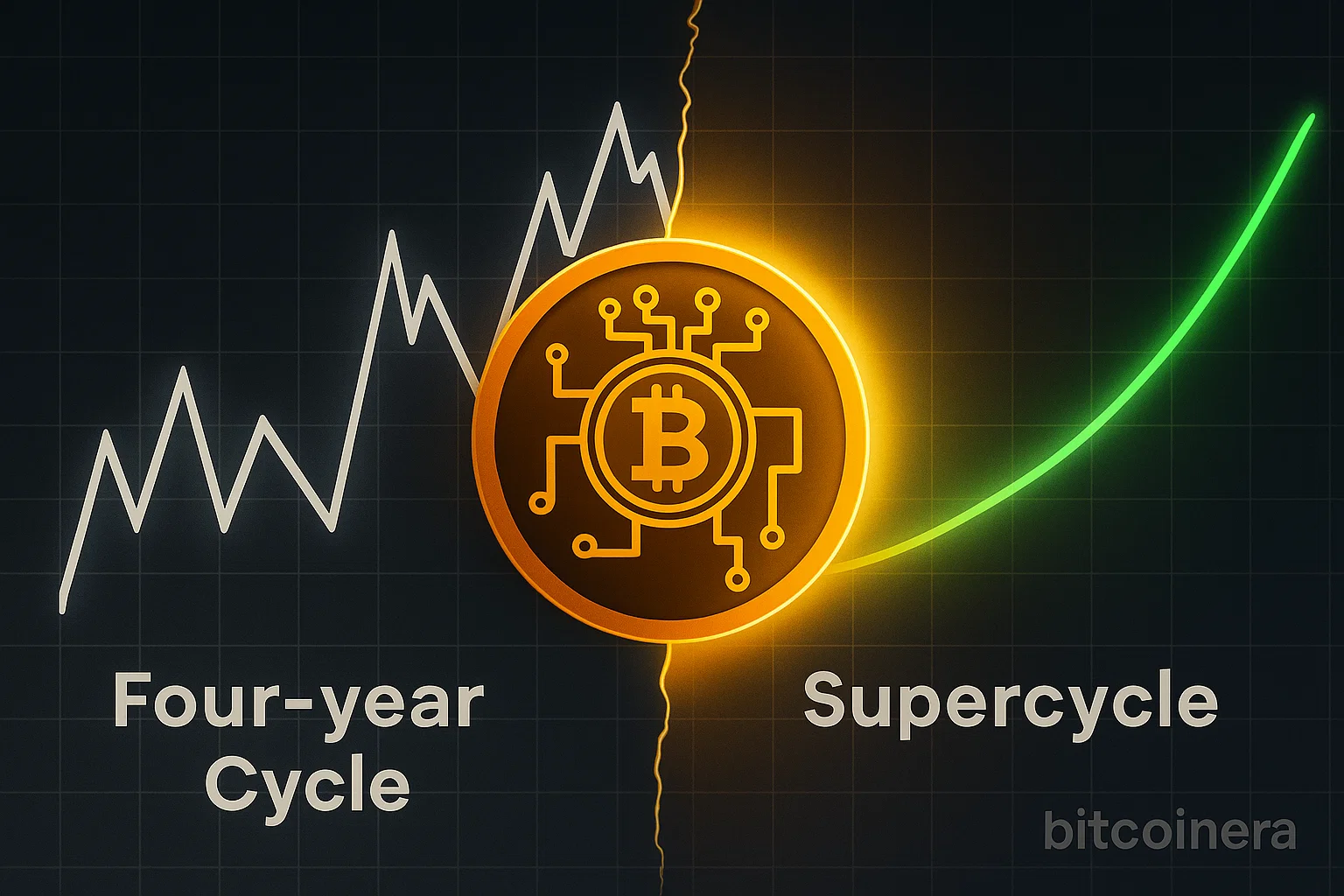
Since its inception, Bitcoin has followed a remarkably consistent four-year market cycle, driven by the “halving” event which cuts the supply of new coins by 50% every four years. This pattern, a parabolic bull run, a brutal bear market, and a recovery/accumulation phase, has been the gospel of crypto investors. However, in 2025, a controversial new theory is gaining traction: the “Supercycle” Thesis. This theory argues that the adoption of Spot Bitcoin ETFs and the entry of massive institutional capital have fundamentally broken the four-year cycle, transitioning Bitcoin into a different phase of maturity.
The Dampening of Volatility
The core argument for the Supercycle is that the market is now too big to be pushed around by retail mania alone. In previous cycles, the market was small enough that a wave of retail hype could drive the price up 100x, followed by a 90% crash when the hype faded. Today, with trillions of dollars in market cap and major asset managers like BlackRock and Fidelity holding the asset, the volatility is being dampened. Institutions rebalance their portfolios quarterly; they buy the dips and sell the rips. This constant, deep liquidity prevents the catastrophic 85% drawdowns of the past, but it may also prevent the 100x gains.
Diminishing Returns of the Halving
Mathematically, the impact of the halving is diminishing. In 2012, the drop in new supply was massive relative to the trading volume. Today, the amount of Bitcoin mined daily is a tiny fraction of the daily global trading volume. The “supply shock” is becoming less relevant compared to the “demand shock” from macroeconomics. The Supercycle theory suggests that Bitcoin will start to behave less like a speculative tech stock and more like gold: a slow, steady, secular uptrend that grinds higher over decades, rather than exploding every four years.
Decoupling from the Crypto Casino
Another aspect of the Supercycle is the potential “decoupling” of Bitcoin from the rest of the crypto market. In previous cycles, Bitcoin led the way, and then profits rotated into altcoins. The Supercycle suggests that institutions are only interested in Bitcoin (and perhaps Ethereum) as “investment grade” assets, and will ignore the thousands of speculative altcoins. This could lead to a market where Bitcoin trends slowly upwards while the rest of the market stagnates or dies off.
Strategic Implications
If the Supercycle is real, the “sell everything at the top of the 4-year cycle” strategy is dangerous. You might sell your Bitcoin anticipating a crash that never comes, leaving you stranded in cash while the asset continues to compound. It requires a shift in mindset from “cycling” to “holding.” This long-term perspective aligns with the principles of Fundamental Analysis, focusing on the asset’s role in the global monetary system rather than chart patterns.
For investors navigating this potential paradigm shift, having a secure, regulated environment to hold assets long-term is key. Platforms like the YWO trading platform offer the stability and various account types needed for a “forever hold” strategy, regardless of whether the four-year cycle persists or fades away.

Lily Brown is a self-made millionaire and expert in crypto trading with robots. She made her fortune by being one of the first people to invest in Bitcoin, and has since become a leading authority on crypto investing. Lily’s unique approach to trading has earned her a reputation as one of the most successful traders in the world, and she regularly shares her insights with others through her blog and online courses.